
Fresh, fruity, creamy and delicious! The original passionfruit and raspberry tart has two layers of soft fresh raspberry jelly and passion fruit cream covered with a simple passion fruit glaze. We took it to my brother’s place in Birmingham on Boxing Day and it was gone in a blink of an afternoon. Everyone without exception said it was delicious. Yay! Made on the first day of our Cordon Bleu course, it was loved by us all and gained several of your votes on this blog’s ‘I’d like the recipe for …’ poll. Plus in a bid to eat better in January there’s the refined sugar-free version sweetened with maple syrup or honey, the healthier St Clement’s raspberry tarts: gluten-free buckwheat pastry filled with an ‘oranges and lemons’ cream and raspberry jelly. Two versions for the price of one and so yummy it’s hard to know which I prefer… er… both! 🙂

Passion fruit and raspberry tart
THE RECIPE
I adapted the Cordon Bleu recipe playing around with quantities, increasing the raspberry layer and reducing the gelatine in both layers to enhance the flavour and texture. This tart also has my go-to thinner sugar-free shortcrust flavoured with a little ground ginger rather than the originally thicker and crumbly sweet pastry. My family all agreed the pastry was perfect but do use your own recipe for sweet shortcrust if you prefer.
In the midst of new year efforts to eat more healthily there’s a further adaptation of the recipe to make it refined sugar-free and gluten-free. And since some people have trouble finding passion fruits it’s a St Clement’s tart with oranges and lemons – a little about the nursery rhyme coming later.
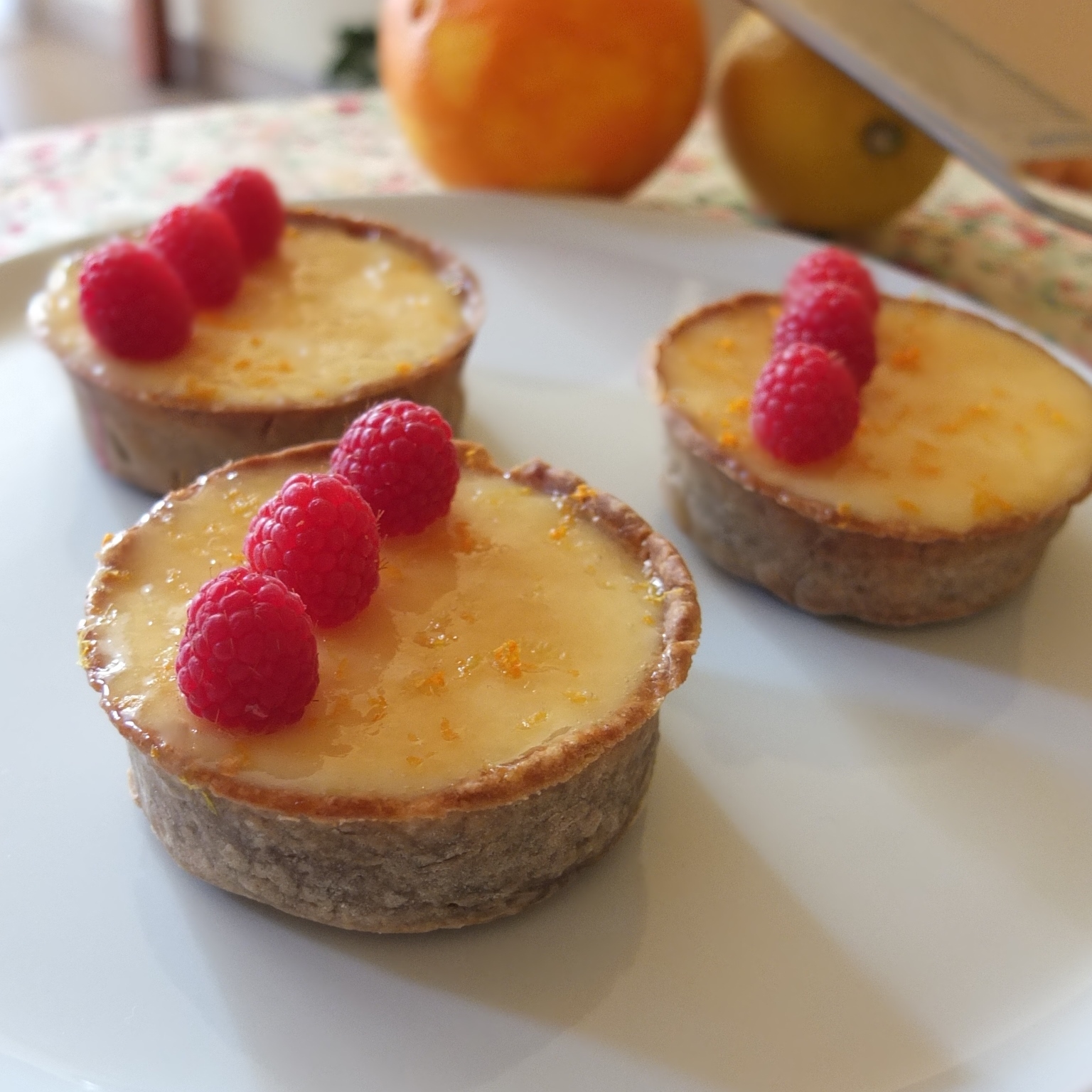
Healthier St Clement’s raspberry tarts, looking more rustic with buckwheat pastry and honey glaze
I had my first scrumptious St Clement’s cake in Wales last year and here I’m finally trying to recreate the flavour but you could also use clementines, mangoes or other fruit and frozen berries for the raspberry layer.
Timings
Make the pastry case first so it can cool before filling your tart. Pastry case: 15 minutes of work; resting – approximately 50 mins + 50 mins; baking – 20-30 mins; raspberry layer – 10 mins + up to 1 hour freezing; passion fruit layer – 15 mins + 30-50 mins freezing. Glaze: 5 mins then 10-20 minutes gellifying. Around 45 minutes of work in total.
The pastry case(s)
GLUTEN-FREE OPTION: replace the plain flour with buckwheat flour

buckwheat pastry cases
Preparation
- Grease the inside of your tart ring(s) or mould with a thin layer of butter. Use deeper tart rings (2 and a half cm/1 inch high): one tart ring of 20cm/8inch diametre or 7 to 8 small rings of 8cm/3 inch diametre.
Ingredients
- 125g/1 cup plain white/all-purpose flour (replacing the spelt flour in the diagram) or buckwheat flour
- 1 teaspoon stevia or 1 tablespoon xylitol (or sugar if you prefer)
- 1 quarter teaspoon ground ginger, to taste
- pinch of fine sea salt
- 45g/3 tablespoons cold unsalted butter, cut into small cubes
- 1 egg yolk (20g) beaten with 1-2 tablespoons/16-32g cold water (I used 2 tbsp water with buckwheat flour but it may be less if using plain all-purpose flour, and it depends on your climate too)
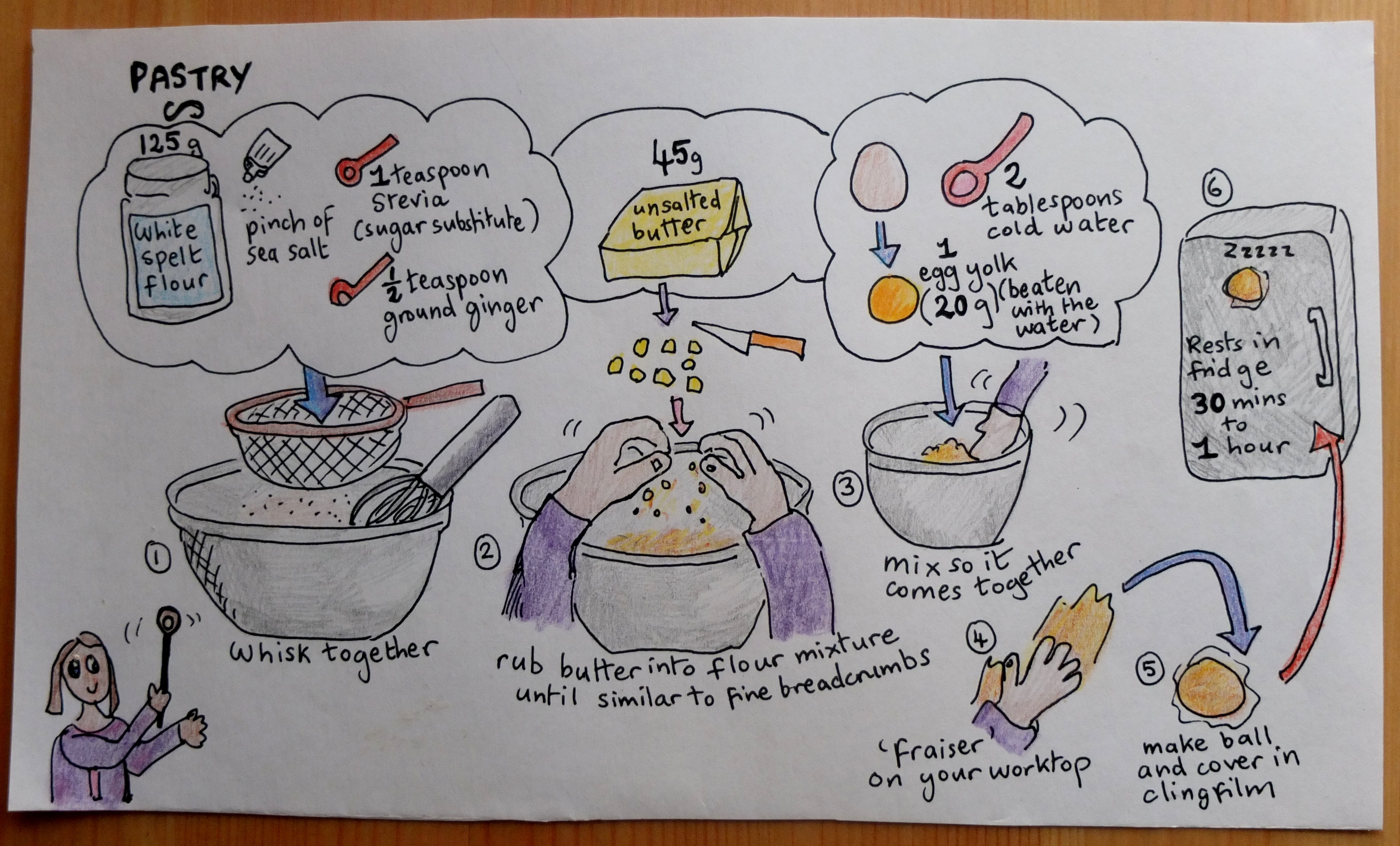
For my detailed instructions or pastry tips follow this link for making shortcrust pastry. GLUTEN-FREE OPTION: the buckwheat flour makes the pastry darker (but it’s delicious) and also more difficult to handle. So you could increase the quantities by a quarter to keep the pastry a little thicker and easier to move to the tart ring/tin(s) or tin (156g/1 and a quarter cups buckwheat flour; 1 and a quarter tsp stevia; a little more than a quarter tsp ground ginger; 56g/a quarter cup butter; 25g egg yolk plus 2 and a half tablespoons water).

buckwheat pastry cases
Once you’ve lined your tart ring or mould, freeze around 50 minutes before baking to make your pastry case more stable. Blind-bake your pastry case filled with baking paper (or heatproof plastic film) and beans at 190°C/375°F (static oven) and 170°C/340°F (fan/convection oven) 10-15 minutes till firm and very lightly coloured. Take out and remove the paper and beans to bake uncovered a further 8-15 minutes at a reduced heat of 180°C/350°F (static oven) or 160°C/320°F (fan/convection oven) till fully done and brown. Please be flexible about baking times as it depends on your oven and thickness of pastry. If you need them there are more detailed instructions for lining a French tart ring and blind baking here.
The raspberry layer
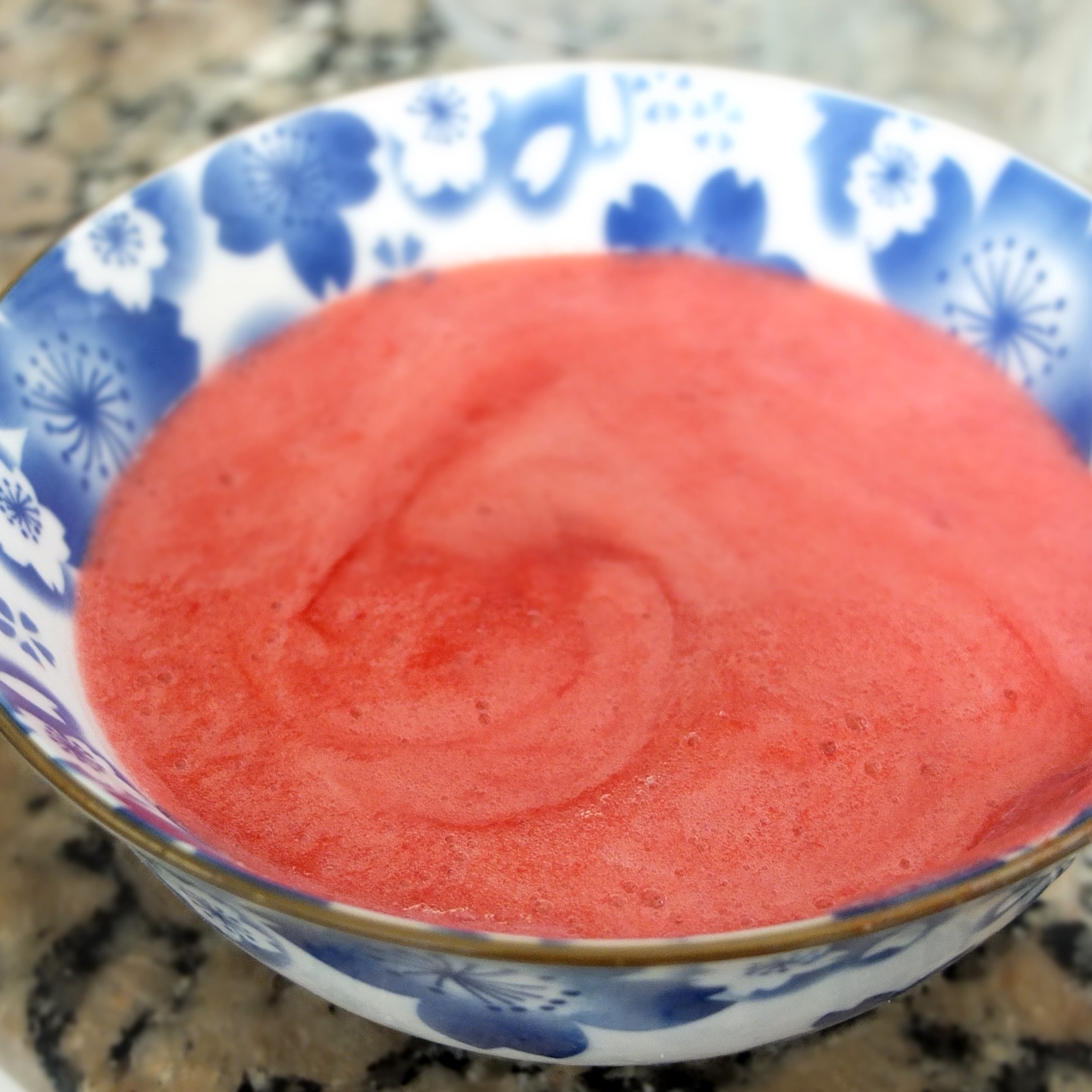
When your pastry case or cases have almost cooled make the raspberry layer.
- 250g/ml (1 cup) raspberry juice – press fresh raspberries through a sieve to get rid of the seeds and extract the juice (needs about 340-400g fresh raspberries)
- 30g/2 tablespoons caster/superfine sugar, or more to taste (I used unrefined golden caster sugar) HEALTHIER OPTION: use the same weight of honey or maple syrup
- 2 and a half sheets of gelatine (5g) – 3 sheets to have it more gellified
- Soak the sheets of gelatine in a bowl with a good quantity of cold water for about 5 to 10 minutes, till softened.
- Stir the raspberry juice and sugar or maple syrup/honey in a small saucepan and bring just to the boil. Take off heat.
- Squeeze the gelatine in your hand to get the excess water out then add to the raspberry mixture and whisk till it dissolves.
- Pour into a clean bowl and wait for it to cool to room temperature or 30°C then pour carefully into the pastry case. Place in the freezer to set, between 30 minutes to 1 hour.
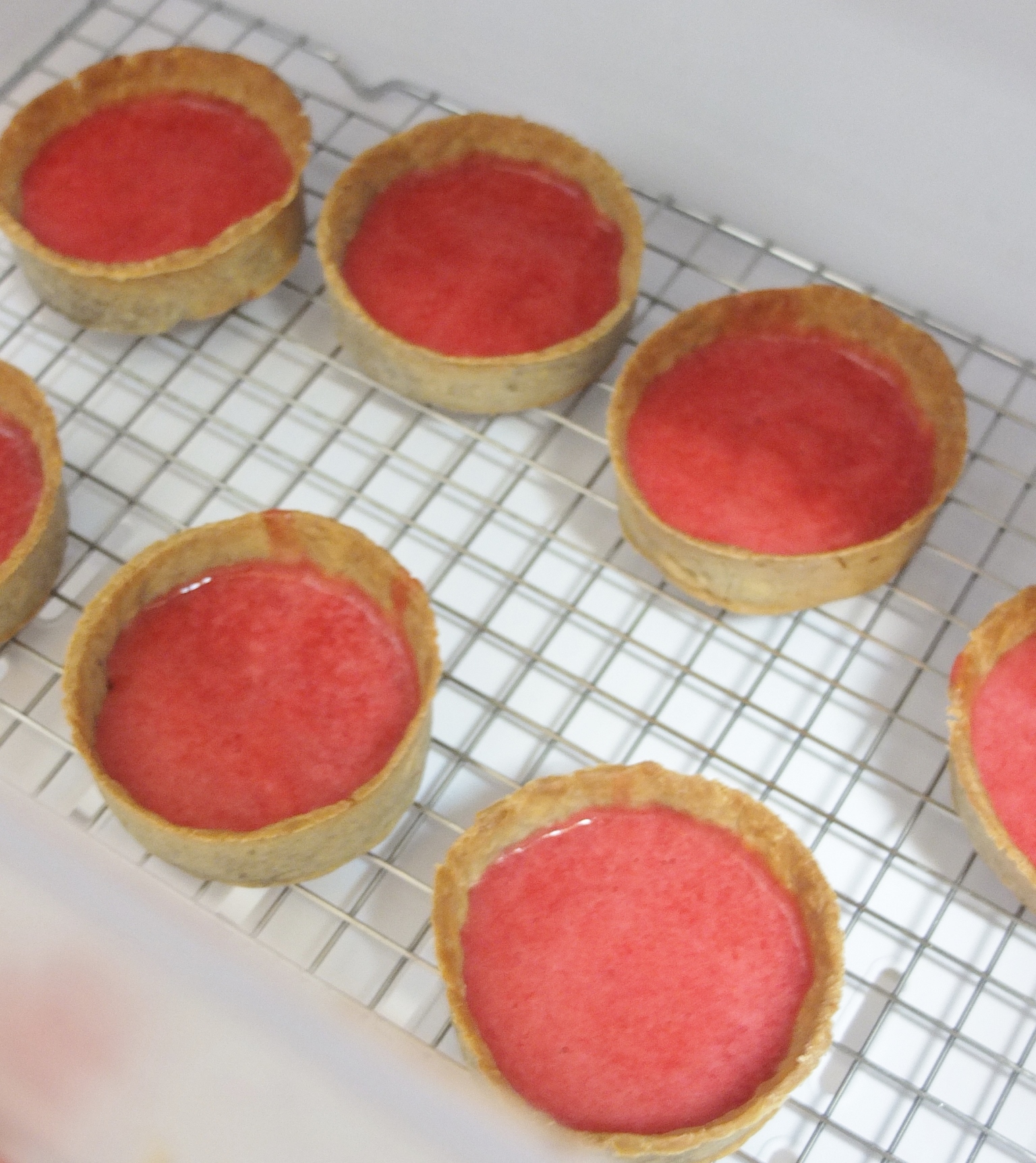
The passion fruit mousse layer – a passion fruit curd with butter and gelatine
- 80g/ml (1/4 cup plus 4 teaspoons) passion fruit juice – press the fresh pulp through a sieve to eliminate the seeds and extract the juice. SAINT CLEMENT’S VERSION: 40g/2 tbsp plus 2 tsp freshly squeezed orange juice with 40g/2 tbsp plus 2 tsp freshly squeezed lemon juice (all passed through a sieve)
- 105g eggs (2 small eggs)
- 95g/half a cup minus 4 teaspoons caster/superfine sugar HEALTHIER OPTION: 95g maple syrup or honey (I used 60g maple syrup and 35g honey) – I like my citrus fresh and tart but you might want to use 100-110g to make it sweeter
- 1 and a half sheets of gelatine (4g) – or 2 sheets for a less creamy but more stable flan-like texture
- 160g/three quarters of a cup cold butter, cut into small pieces
- Soak the sheets of gelatine in a good quantity of cold water for about 5 to 10 minutes, till softened.
- Meanwhile whisk the juice and eggs in a small/medium-sized saucepan.
- Whisk in the sugar or maple syrup/honey.
- Bring just to the boil on a medium heat then take off heat immediately.
- Squeeze the gelatine in your hand to get the excess water out then add to the passion fruit mixture and whisk till it dissolves.
- Pour into a clean bowl then whisk in the butter till it melts and the mixture is smooth.
- Allow to cool to room temperature (when you put your little finger in it shouldn’t feel hot or cold) then pour over the set raspberry layer. Place in the freezer to set, between 30 minutes to an hour.
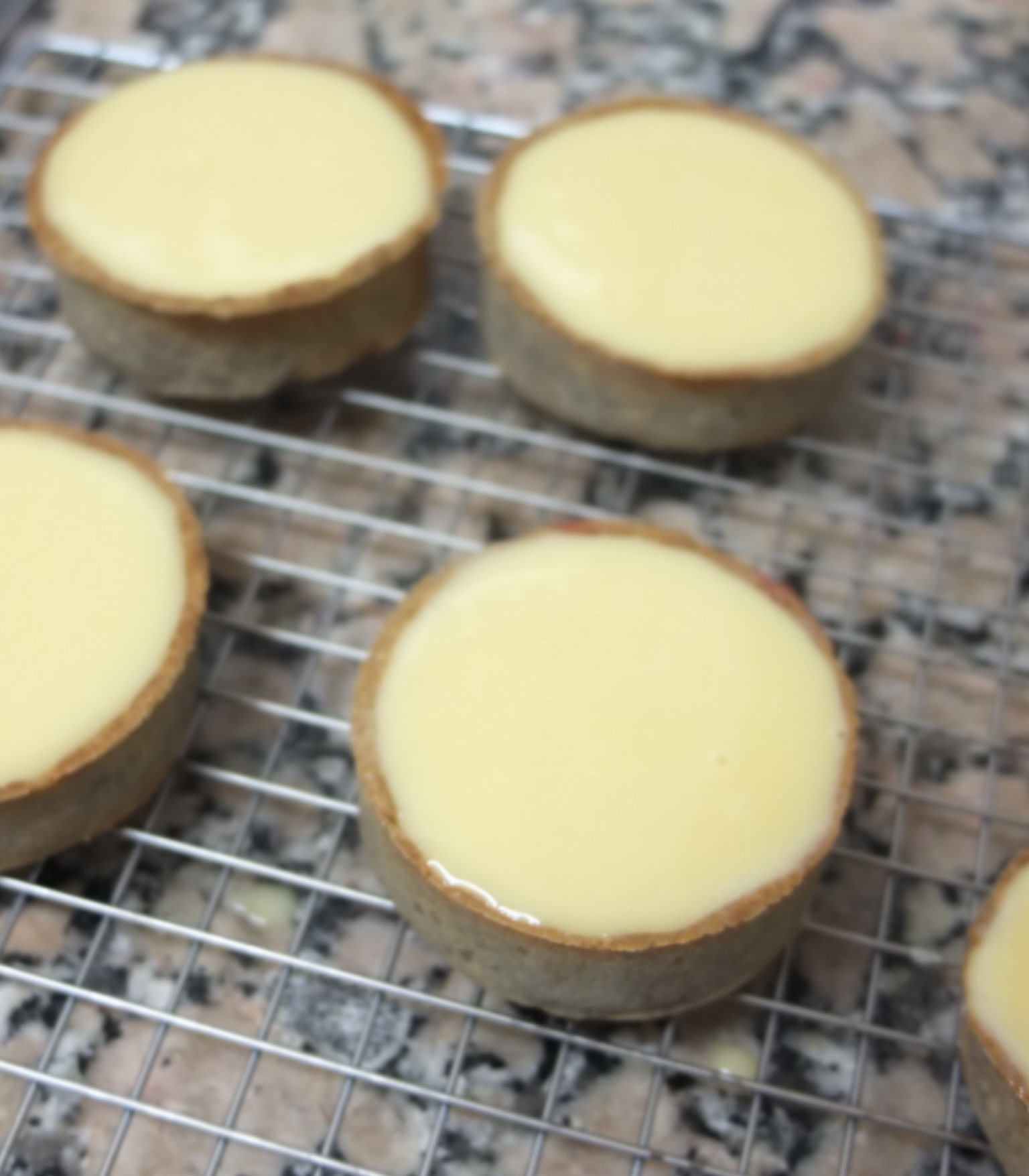
Passionfruit glaze (optional)
HEALTHIER OPTION: you can replace the sugar with honey or maple syrup and leave out the passion fruit but your resulting glaze will be darker and more ‘rustic’. Grate lemon and orange zest over the glaze.
- 75g white caster/superfine or granulated sugar
- 75g/ml water
- 1 sheet of gelatine
- pulp of 1 passion fruit
- Make the glaze. You can see my instructions for a very simple standard neutral mirror glaze recipe here. Alternatively, you can buy some ready-made neutral jelly glaze (nappage neutre).
- Place about two-thirds or more of your glaze in the centre of the tart then spread out lightly with a spatula knife from the centre outwards to the sides. Add a little if necessary. Finally smoothe in a once over sliding your spatula knife all the way across the top from one side to the other.
- Finally decorate with a line of fresh raspberries. If you don’t have any fresh raspberries left you can also sprinkle lines of freeze-dried raspberries like I did.
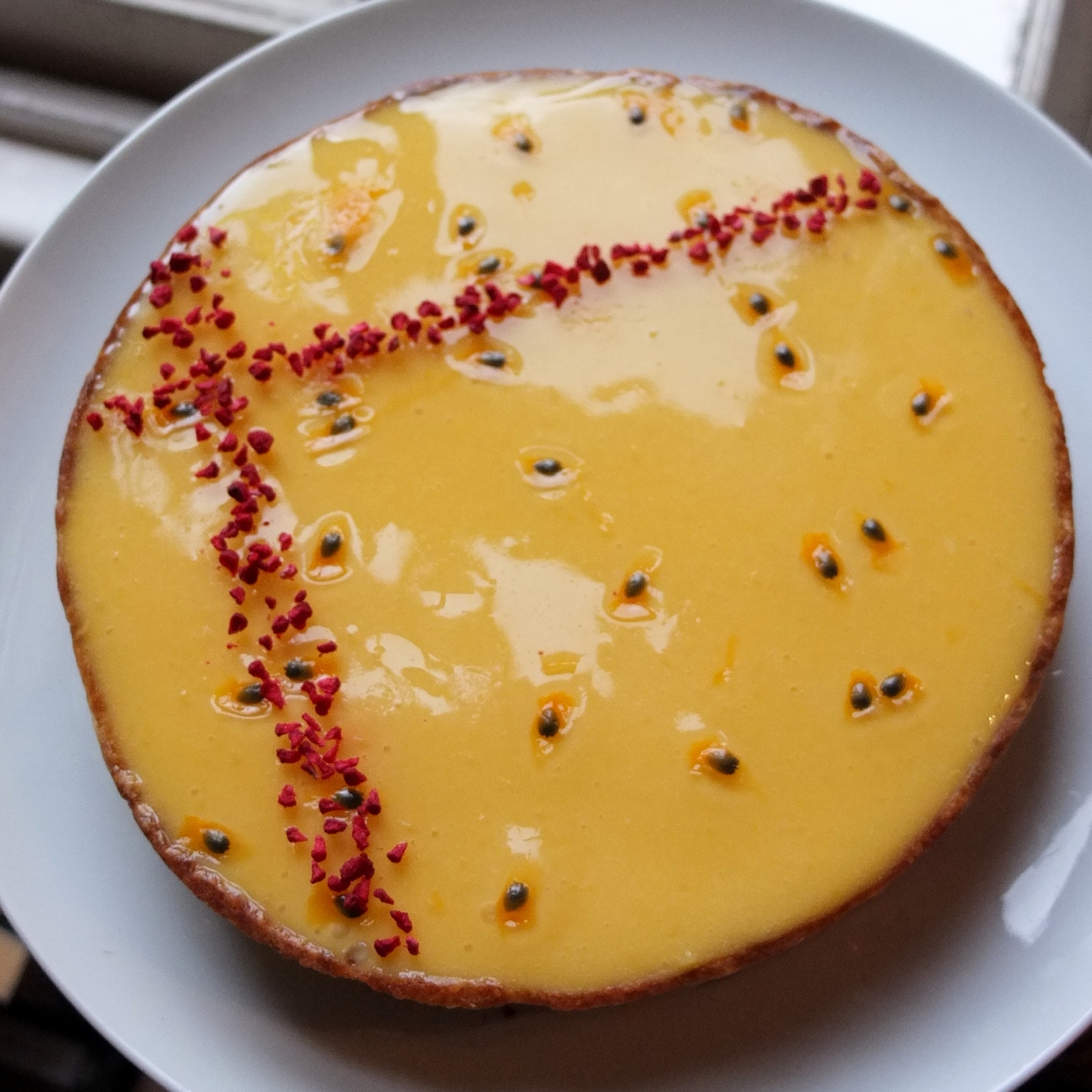
Passion fruit and raspberry tart
Storing and eating your tarts
The original passionfruit and raspberry tart (using the higher quantities of gelatine) kept well 2 to 3 days in the fridge and also froze very well (defrost and eat within a month or so). The small orange and lemon tarts were a little creamier because of the lower quantities of gelatine and the pastry softened more quickly so they were better on the first day but still delicious on days 2 and 3. They kept better without the honey glaze. In fact I think the little healthier tarts looked great without the glaze and just a sprinkling of orange and lemon zest. You can of course experiment to suit your tastes.

Healthier St Clement’s raspberry tarts
The song
Oranges and Lemons, say the bells of St Clement’s, You owe me five farthings, say the bells of St Martin’s…
St Clement’s is a church in London and the famous nursery rhyme mentions many other local churches. There are youtube videos of the Oranges and Lemons nursery rhyme and also ‘Oranges and Lemons – meaning behind the nursery rhyme‘ that explains some of the lyrics and the final gory lines. You’ll find a number of St Clement’s cakes online and it’s a nice flavour worth playing around with to get that tasty balance between oranges and lemons.
So hope you’ll play around with this yummy dessert. I’m sharing it with Free from Fridays hosted by Emma@Freefromfarmhouse and Perfecting Patisserie@bakingqueen74.

Please help yourselves to a slice of the original passionfruit and raspberry tart.
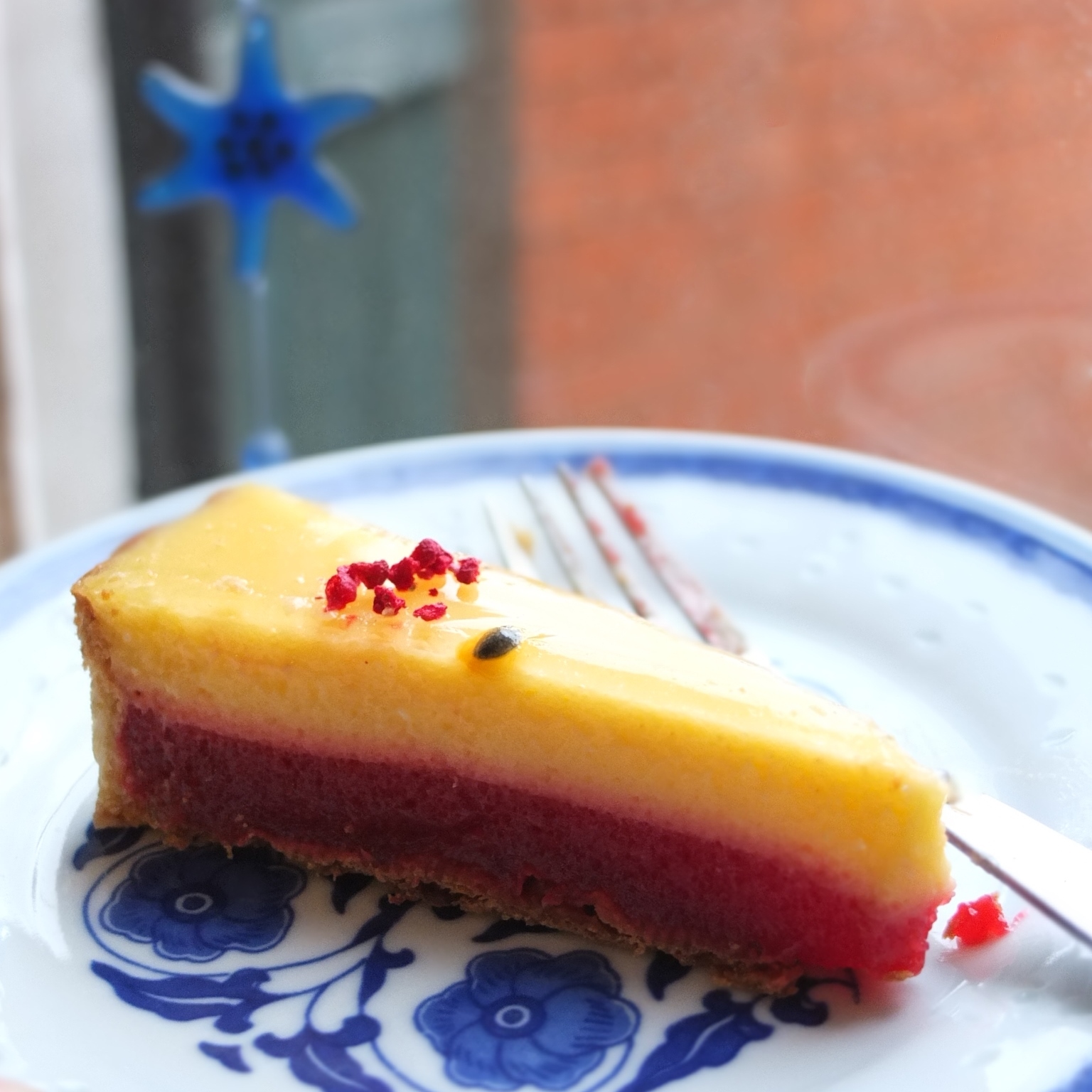
Passion fruit and raspberry tart
Or perhaps a healthier St Clement’s orange and lemon, raspberry tart?
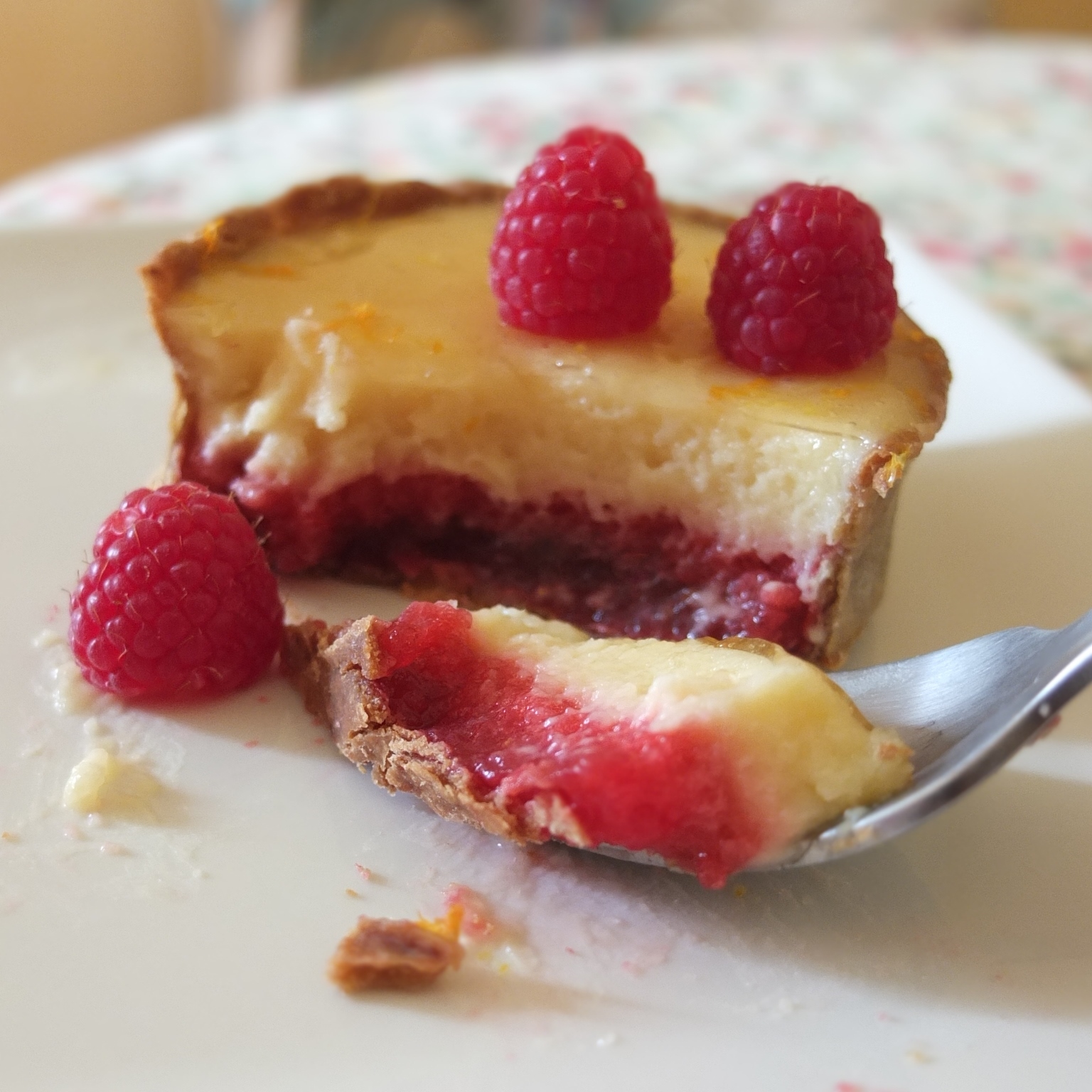
Healthier St Clement’s raspberry tarts
Farewell for now sweet reader! Wishing you a lovely end of the week getting ready for the weekend, with some happy baking and eating! 🙂 x

 lili's cakes
Delicious! Loved the detailed instruction for the recipe! It’s the beauty of your blog! Great pictures too!!
LikeLiked by 2 people
I agree! Her instructions are brilliant! 👍👍👍👏👏👏👏
LikeLiked by 2 people
Very true☺
LikeLiked by 1 person
And thank you Natascha too! It’s really reassuring to know the instructions are understandable
🙂
LikeLike
Thank you Lin for your sweet words and I’m happy you like the instructions and pictures – sometimes I worry it’s all a bit long! 🙂
LikeLiked by 1 person
It’s fun to read! More like an experience
LikeLiked by 1 person
Drooling again – not a braw look for me btw!
LikeLiked by 1 person
Thank you and nothing wrong with a bit of drooling Alba 🙂
LikeLike
Not only lemon, but raspberry layer as well? Heavenly! 🙂
LikeLiked by 1 person
Thanks! Yes, not one but two layers 🙂 I have the Cordon Bleu course to thank for the original and not sure I’ve seen this kind of tart anywhere else yet…
LikeLiked by 1 person
Love the finish looks!
LikeLiked by 1 person
Thank you! 🙂
LikeLike
Your tarts look fabulous! I am drooling right now!
LikeLiked by 1 person
Thanks so much! Happy to hear of more drooling! 🙂
LikeLike
Lili, these tarts are another gourmet work of art. I’ve never had passion fruit before. It’s another one of those ingredients that I look forward to trying.
LikeLiked by 1 person
Thank you Julie! I think you’ll love passion fruit – it has a beautiful flavour, which probably explains why it’s been so popular in French patisserie recently. Let me know what you think when you try it! 🙂
LikeLiked by 1 person
Your tarts are a beautiful creation. And thank you for the buckwheat pastry recipe. I will be sure to try that.
LikeLiked by 1 person
Thank you Hilda! And you’re very welcome – I was surprised at how simple and delicious buckwheat pastry is, even though it’s a little more delicate, needs more care and looks a bit dark. I’d love to know what you think when you try it! 🙂
LikeLike
How amazing and pretty…bookmarked to try. Thanks Lili!
LikeLiked by 1 person
Thank you and you’re very welcome Zeba! Looking forward to seeing yours! 🙂
LikeLiked by 1 person
Oh, these look so good!
LikeLiked by 1 person
Thank you Sarah! 🙂
LikeLiked by 1 person
I,love the stripe of different colours when you cut into your tart here, it looks fabulous! The two fillings sound achievable thanks to your great instructions and explanations too. I shall have to give it a go! Thanks for joining in with Perfecting Patisserie!
LikeLiked by 1 person
Thank you Lucy! So happy you like this tart and are thinking of making it – yay! As you noticed, you shouldn’t find it difficult – it just has a few stages to go through. Thanks for hosting Perfecting Patisserie! 🙂
LikeLike